Diablo Robot Platform and Vision Module Compatibility
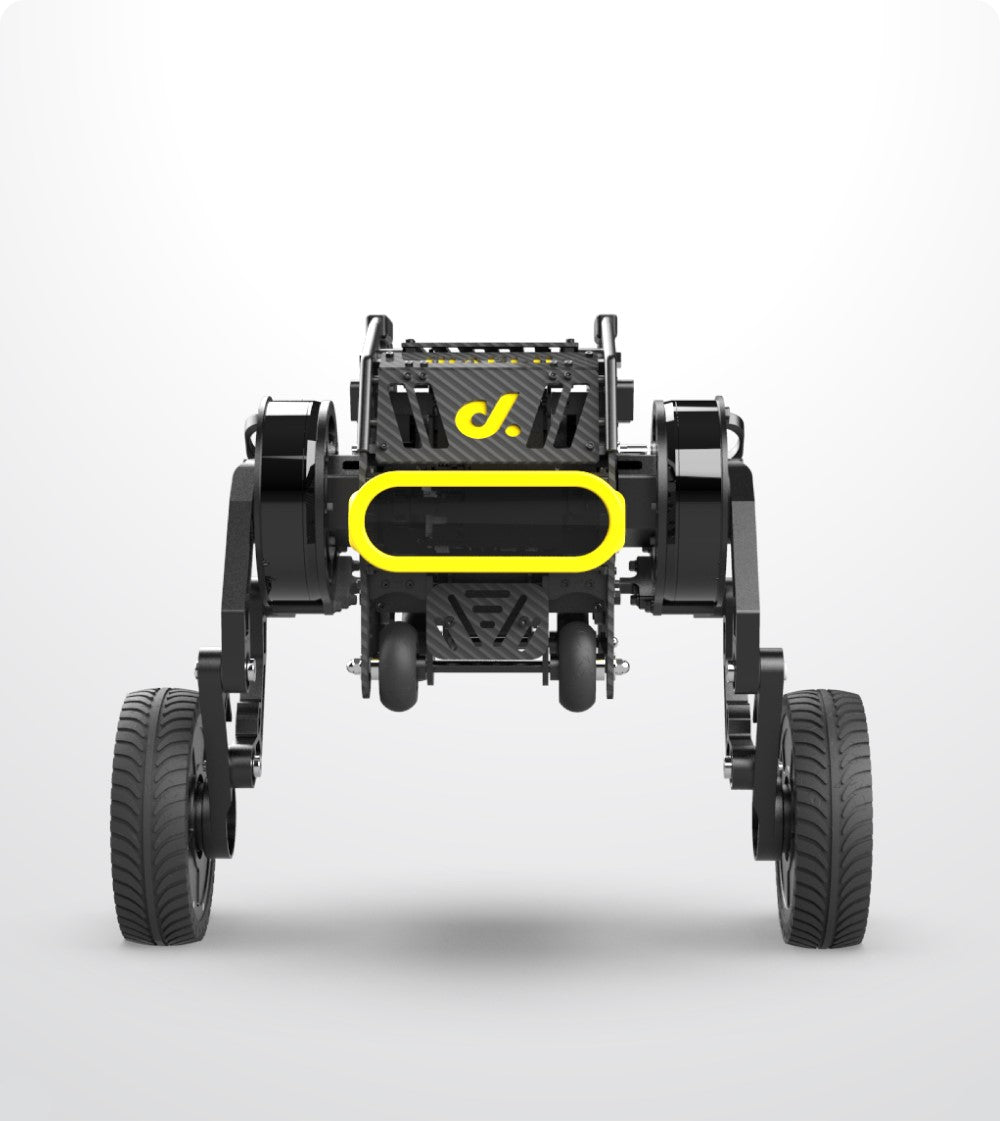
Diablo Robot Platform and Vision Module Compatibility focuses on how the robot platform works with different vision sensors to support autonomous applications. The system can integrate RGB cameras, stereo cameras, depth cameras, and AI vision modules through common interfaces such as USB, Ethernet, and embedded camera connections. With suitable sensor selection, the platform can support navigation, object detection, mapping, and robotics research. Vision compatibility depends on hardware connection, software support, and computing capability.
Vision modules are an important part of mobile robot development because they allow robots to collect information from their surroundings. The Diablo Robot Platform is designed with a modular structure, allowing developers to add different sensing components according to project requirements. Compared with fixed sensor configurations, modular platforms provide more options for researchers, educators, and engineers who need to test different perception methods.
A robot equipped with only basic movement functions can complete simple tasks, but adding vision modules allows it to understand position, distance, and objects in its environment. In robotics projects published between 2018 and 2025, camera-based perception remained one of the most common approaches because cameras provide rich information at relatively low hardware cost.
Different vision modules provide different sensing abilities. RGB cameras are widely used because they capture color and texture information required for image recognition, object classification, and visual tracking. Many educational robotics systems use RGB cameras because the hardware cost is often below $100, while providing enough image quality for algorithm development.
Stereo cameras use two lenses to calculate depth by comparing differences between images. This method allows robots to estimate the distance of objects without additional sensors. In indoor environments, stereo cameras can provide depth information within several meters, depending on camera specifications and lighting conditions. Applications such as autonomous navigation and robotic arm positioning often use stereo vision because distance measurement is required during movement.
Depth cameras provide another solution by directly measuring distance information. Technologies such as structured light and time-of-flight (ToF) sensors are commonly used in robotics. A ToF camera measures the travel time of infrared light and creates a depth map. Many commercial depth cameras released after 2020 support frame rates between 30 and 90 FPS, making them suitable for real-time robotic applications.
The choice of vision module must match the robot platform hardware. A camera with higher resolution does not always provide better results if the computing system cannot process images quickly enough. For example, a 4K camera produces significantly more image data than a 720p camera, but the additional information may increase processing time and reduce response speed.
In autonomous robot applications, developers usually balance image resolution, frame rate, processing power, and communication speed. A system running object detection at 30 FPS requires a different hardware configuration from a system performing 3D mapping at 10 FPS.
The Diablo Robot Platform can work with different computing architectures depending on application requirements. Small projects may use embedded processors, while more complex applications may require AI computing modules capable of running deep learning models. Vision algorithms such as object detection, semantic segmentation, and simultaneous localization and mapping (SLAM) require more computing resources than basic image capture.
Software compatibility also affects how quickly a vision module can be integrated. Many robotics developers use ROS-based systems because ROS provides communication tools for cameras, sensors, and control modules. A compatible vision driver allows developers to access image streams, configure camera parameters, and connect perception algorithms with robot movement control.
The platform is suitable for developers who work with open development robot kits, where users can modify hardware and software according to specific applications. More information about Diablo Robot Platform products and related accessories can be found at Diablo Robot Platform.
A typical vision integration process includes several technical steps:
| Integration Step | Main Task | Typical Tools |
|---|---|---|
| Hardware Installation | Mount camera and connect power | USB, Ethernet, expansion ports |
| Driver Setup | Enable communication between sensor and robot | ROS drivers, SDKs |
| Camera Calibration | Adjust camera parameters and coordinate systems | Calibration software |
| Algorithm Development | Add detection, mapping, or tracking functions | AI models, SLAM algorithms |
| Performance Testing | Measure accuracy and response speed | Robot testing platforms |
Camera calibration is required before a vision system can be used for accurate robotic tasks. Calibration determines lens parameters and the relationship between the camera position and robot coordinate system. Even small calibration errors can affect navigation accuracy. In robotic research, calibration errors below 1 pixel are often targeted for high-precision visual tasks.
Sensor placement also affects performance. A front-mounted camera provides better forward navigation information, while multiple cameras can increase viewing coverage. Some mobile robots use a combination of front cameras, side cameras, and depth sensors to reduce missing visual information during movement.
Different industries require different vision configurations. In education and research, simple RGB or stereo cameras are commonly selected because they allow students to learn computer vision algorithms without high equipment costs. In warehouse robotics, depth cameras and stereo vision are more common because robots need accurate distance information when moving around shelves and objects.
| Application Area | Recommended Vision Sensor | Common Function |
|---|---|---|
| Robotics Education | RGB Camera | Image processing and programming training |
| Indoor Navigation | Stereo Camera / Depth Camera | Mapping and obstacle detection |
| Industrial Inspection | High-resolution Camera | Surface analysis and measurement |
| Human Interaction | RGB-D Camera | Body and gesture recognition |
| Research Development | Multi-sensor System | Testing new algorithms |
The communication method between the Diablo Robot Platform and vision modules also affects system performance. USB cameras are easy to install and suitable for many basic applications. Ethernet cameras can transmit larger amounts of data and are commonly used when multiple sensors are connected. Some embedded camera systems use MIPI CSI interfaces because they provide high-speed image transfer with lower power consumption.
Power requirements should also be considered during integration. A vision module may consume between 1 W and more than 10 W depending on sensor type and processing functions. Battery-powered robots need to balance sensor capability with operating time. Adding several high-power sensors may reduce continuous operation time if the power system is not upgraded.
Future robot platforms are expected to use more combined sensing systems. A single camera may not perform well in every environment, especially when lighting conditions change or objects have similar appearances. Combining cameras with IMU sensors, LiDAR, or other sensing technologies can improve navigation reliability.
Between 2019 and 2025, many autonomous robot projects moved from single-camera systems toward multi-sensor designs because combined sensor information improves performance in complex environments.
The Diablo Robot Platform provides a flexible foundation for developing vision-based robotic applications. By selecting suitable cameras, computing hardware, and software frameworks, developers can build systems for education, research, industrial automation, and autonomous operation. The compatibility between robot hardware and vision modules allows users to test different approaches and create customized robotic solutions based on specific project requirements.